
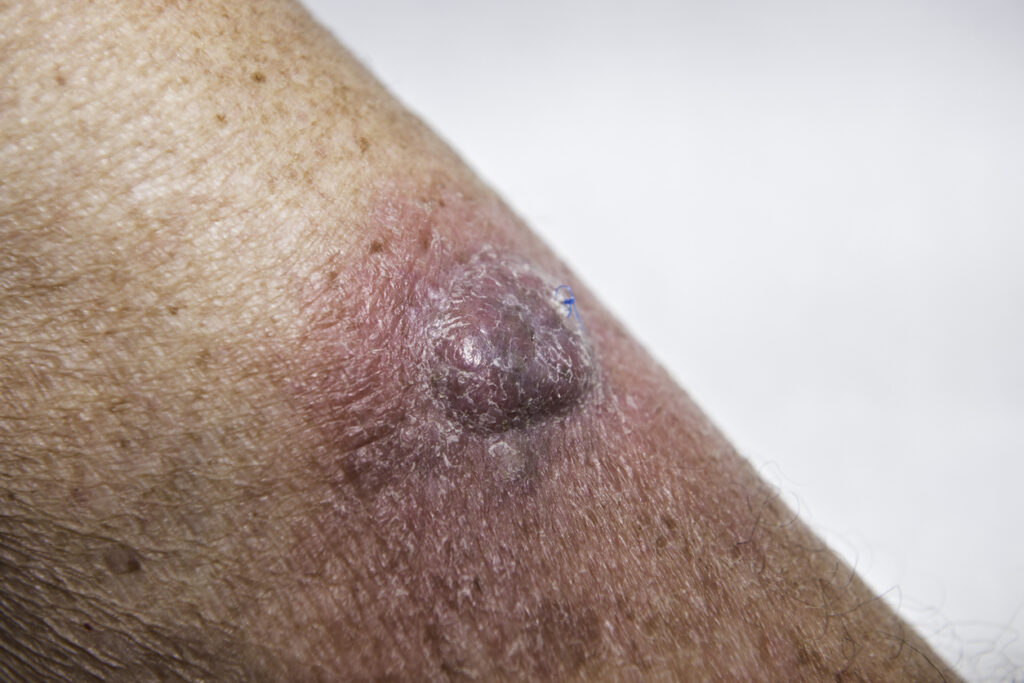
Loss of a protein called WWOX may allow cutaneous squamous cell carcinoma (cSCC) to transform into a more lethal, invasive form, a new study finds.
The findings, published in PNAS, provide a new roadmap to identify which cSCC patients are at the highest risk.
Researchers found that WWOX serves as a “guardian” of epithelial identity. In healthy skin, this protein ensures that skin cells remain stable and perform their intended functions. When WWOX is present, it stabilizes another essential protein known as p63, which acts like a master switch to keep skin cells from losing their shape and structure.
Using advanced genetic models and human tissue samples, the team demonstrated that when WWOX is lost, the p63 protein levels drop significantly. This creates a “perfect storm” for cancer progression. Without these two protectors, skin cells undergo a process called epithelial-to-mesenchymal transition (EMT). Essentially, the cancer cells lose their “skin cell” identity and acquire the characteristics of migratory cells, allowing them to invade deeper tissues and move through the bloodstream to the lungs and other organs.
The study reveals that the loss of WWOX does not just make cancer possible; it dramatically accelerates it. In laboratory models in which both WWOX and p53 were absent, tumors appeared much earlier and were far more aggressive and poorly differentiated than those where WWOX was still functioning.
“WWOX deficiency significantly accelerates tumor onset and progression,” says Study Author Prof. Rami I. Aqeilan of the Lautenberg Center for Immunology and Cancer Research at the Hebrew University of Jerusalem in Jerusalem, Israel, in a news release. All of the subjects in the double-deficiency group developed tumors compared to a much lower percentage in the control groups, he adds.
