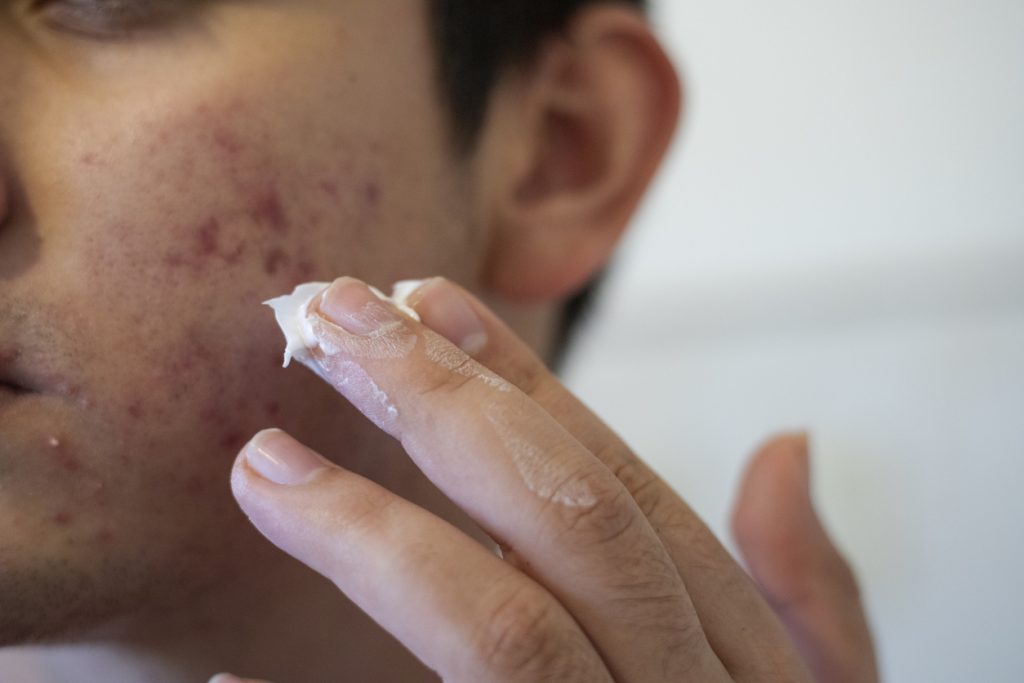
Once-daily, fixed-dose, triple-combination gel comprising clindamycin phosphate 1.2%, adapalene 0.15%, and benzoyl peroxide 3.1% (Cabtreo, Ortho Dermatologics) improved both acne severity and patient-reported skin oiliness in moderate-to-severe acne, with benefits increasing through Week 24.
In a post-hoc analysis of pooled data from four 12-week randomized trials (N=1115) and two 24-week open-label studies (N=50), treatment success rates were significantly higher with Cabtreo than with vehicle at 12 weeks (50.8% vs 18.3%). By Week 24, 66.7% of Cabtreo-treated patients achieved treatment success, defined as a ≥2-grade improvement in severity and a rating of Clear or Almost Clear skin.
Patients also reported meaningful reductions in skin oiliness. At 12 weeks, 67.8% of Cabtreo-treated patients reported a shift from “oily” to “moderately” or “low/not” oily skin, compared with 63.7% in the vehicle group. By Week 24, this proportion increased to 88.9% among those receiving Cabtreo, suggesting that oiliness may continue to improve with ongoing use.
Lesion counts dropped significantly, in line with the overall improvement in severity. At Week 12, Cabtreo-treated patients achieved greater than 72% reductions in both inflammatory and noninflammatory lesions, compared with approximately 48%–53% reductions with vehicle. With longer-term use, reductions reached 87.1% for inflammatory lesions and 67.5% for non-inflammatory lesions by Week 24. These findings are consistent with how the three ingredients work together, targeting multiple drivers of acne, including inflammation, clogged pores, and bacteria.
The analysis focused on patients with moderate-to-severe acne who reported oily skin at baseline, as measured by the Acne-Specific Quality of Life (Acne-QoL) questionnaire. Outcomes included shifts in oiliness perception, changes in lesion counts, and treatment success based on validated severity scales such as the Evaluator’s Global Severity Score (EGSS) and Investigator’s Global Assessment (IGA).
Cabtreo was generally well-tolerated across both short- and longer-term studies. Most treatment-emergent adverse events were mild to moderate in severity, and fewer than 3% of participants discontinued treatment due to adverse events. No new safety signals were identified with extended use, and tolerability scores remained low throughout the study period, indicating minimal irritation or discomfort.
Improvements in perceived oiliness were also observed in the vehicle group, which investigators attributed to the moisturizing and formulation properties of the gel base. However, these effects did not translate into comparable improvements in acne severity or treatment success, underscoring the added clinical benefit of the active combination.
Collectively, the findings suggest that Cabtreo gel offers a comprehensive topical approach for patients with moderate-to-severe acne, addressing both lesion burden and excess oil. For patients who identify oiliness as a persistent concern, the ability to improve both objective and subjective outcomes with a single, once-daily treatment may represent a meaningful therapeutic advantage.