
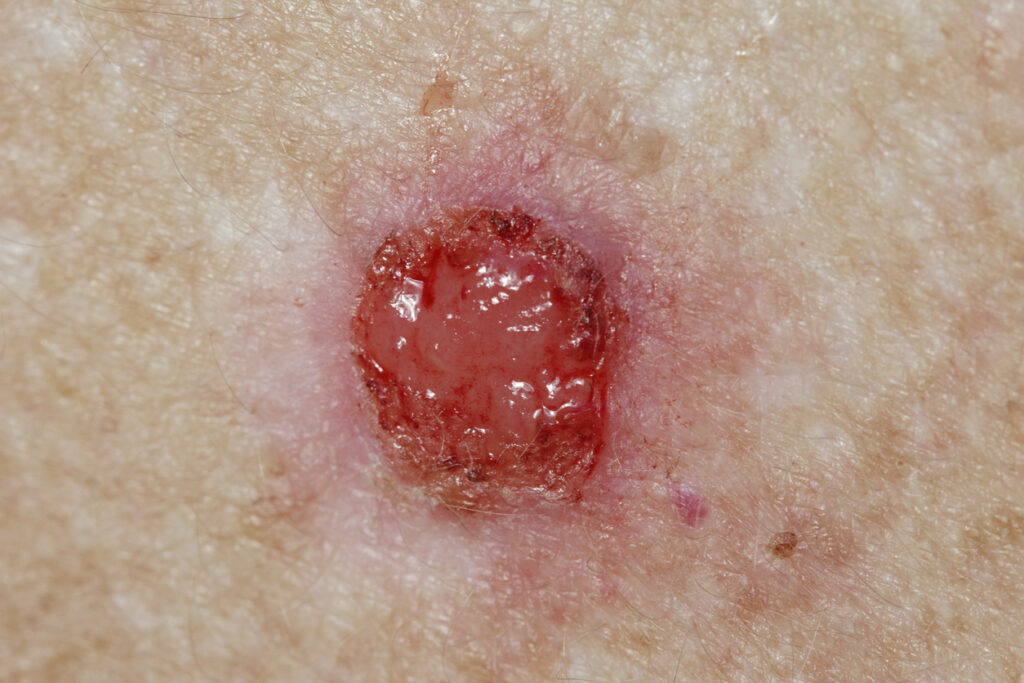
An experimental microneedle patch that delivers chemotherapy directly into skin tumors may represent a new way to treat basal cell carcinoma, according to top-line results from a Phase 2 clinical trial.
The therapy uses a dissolvable microneedle array to deliver doxorubicin directly into tumors. Medicus Pharma reported that the highest dose tested in the study achieved 73% clinical tumor clearance and 40% histological clearance at Day 57 following treatment.
The findings come from the SKNJCT-003 Phase 2 study, a randomized, double-blind, placebo-controlled trial enrolling 90 patients with nodular basal cell carcinoma across multiple clinical sites.
Patients were randomized into three groups:
- placebo microneedle patch
- 100-microgram dose of the drug patch
- 200-microgram dose
The trial’s primary endpoint measured the proportion of patients achieving both visible tumor disappearance (clinical clearance) and microscopic confirmation of cancer elimination (histological clearance) after treatment.
Results showed increasing response rates over time, with the strongest outcomes in the higher-dose group.
At Day 57, the 200-microgram cohort demonstrated:
- 73% clinical clearance
- 40% histological clearance
Lower-dose groups showed more modest responses, while the placebo group demonstrated lower clearance rates overall.
“We are extremely encouraged by these top-line results, which we believe provide decision-grade evidence of clinical activity, particularly at the 200-microgram-dose level,” says Dr. Raza Bokhari, Executive Chairman and CEO of Medicus Pharma, in a news release.
The company expects to finalize the study results in the second quarter of 2026, which will include full safety analyses and additional data from the trial.
Those results are expected to support a planned End-of-Phase-2 meeting with the US Food and Drug Administration, where regulators and the company will discuss next steps in development.
The trial was not designed as a registrational study, meaning the results alone are not sufficient for regulatory approval.
The therapy is being developed by SkinJect Inc., a subsidiary of Medicus Pharma, as a potential non-surgical treatment for basal cell carcinoma.
