
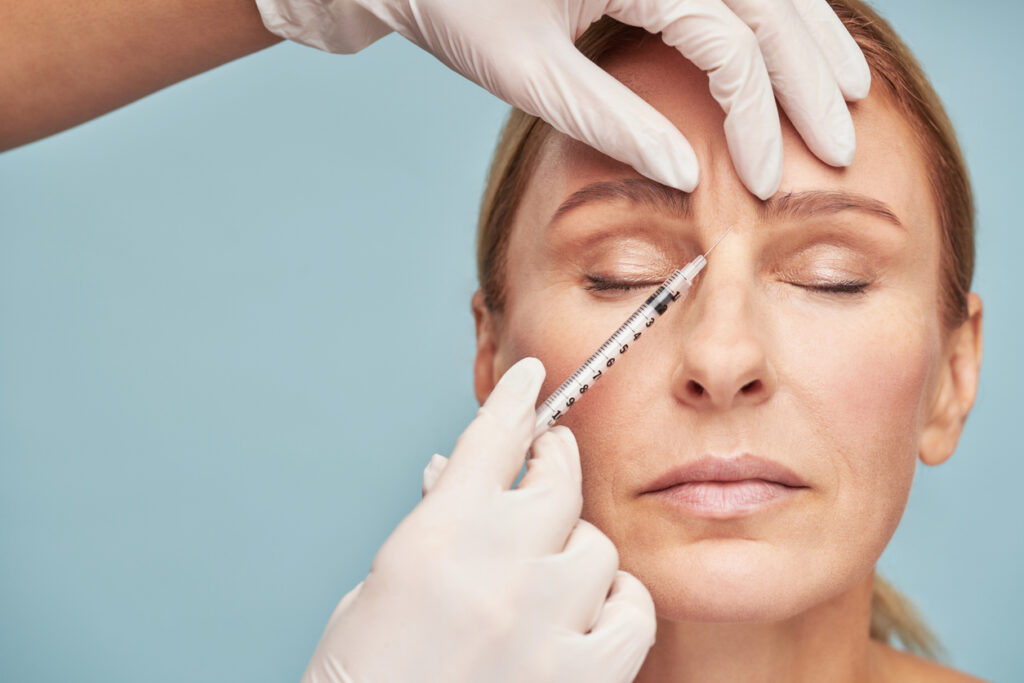
Revelyx Bio, Inc.’s YY003, an investigational recombinant botulinum toxin type A in a ready-to-use liquid formulation, met its primary endpoints and key secondary endpoints in adults with moderate-to-severe glabellar lines, according to top-line results from a Phase 2 clinical trial.
The two-part study randomized 153 adults at three clinical sites in Australia under a US Investigational New Drug application. Part A evaluated safety and tolerability across three dose levels. In Part B, 129 participants were randomized in a double-blind, vehicle-controlled evaluation of the two doses (30 U and 40 U) selected by an independent data monitoring committee.
The study’s primary endpoints included safety and the composite response rate at Week 4, defined as the proportion of participants achieving a score of none or mild on the Facial Wrinkle Scale and at least a two-grade improvement from baseline, as assessed independently by both the investigator and the participant.
Key secondary endpoints included response rates as assessed by investigators, participants, and an independent review committee; the proportion of participants achieving a score of none or mild; patient-reported onset of effect; global aesthetic improvement; patient satisfaction at each post-treatment visit; and immunogenicity.
The composite response rates were 80.8% at 40 U and 66.7% at 30 U with YY003, compared with 0% for vehicle at Week 4. At Week 4, 92.3% of participants receiving 40 U achieved a score of none or mild on the Facial Wrinkle Scale as assessed by investigators, the researchers report. Fully 90.4% of participants receiving 40 U achieved a score of none or mild by Week 1 — approaching the Week 4 result of 92.3% — compared with 3.8% for vehicle, the study showed. In addition, 94.2% of participants receiving 40 U reported improvement on the Global Aesthetic Improvement Scale vs. 0% for vehicle, and 90.4% reported satisfaction with the appearance of their frown lines vs. 7.7% for vehicle. There were no neutralizing antibodies detected in any participant, and only one of 106 participants was positive for anti-drug antibodies (0.9%), while maintaining a clinical response.
YY003 was generally safe and well-tolerated in this study. The most common treatment-related adverse events were injection-site reactions and headache. No treatment-related serious adverse events occurred, and there were no discontinuations due to adverse events in any group.
“The data are compelling, particularly since the study incorporated a rigorous primary endpoint requiring both the investigator and the participant to independently record at least a two-grade improvement,” says Gregory Julian Randal Goodman, MBBS (Hons), MD, Director of Dermatology Institute of Victoria in South Yarra, Australia, President of Australasian Society of Cosmetic and Procedural Dermatologists, and principal investigator of the study. “YY003 has the potential to become the world’s first ready-to-use liquid recombinant type A botulinum toxin. In addition to the encouraging efficacy and safety findings observed in this study, its liquid formulation may offer a practical benefit in the clinic by eliminating manual reconstitution and simplifying product preparation.”
