
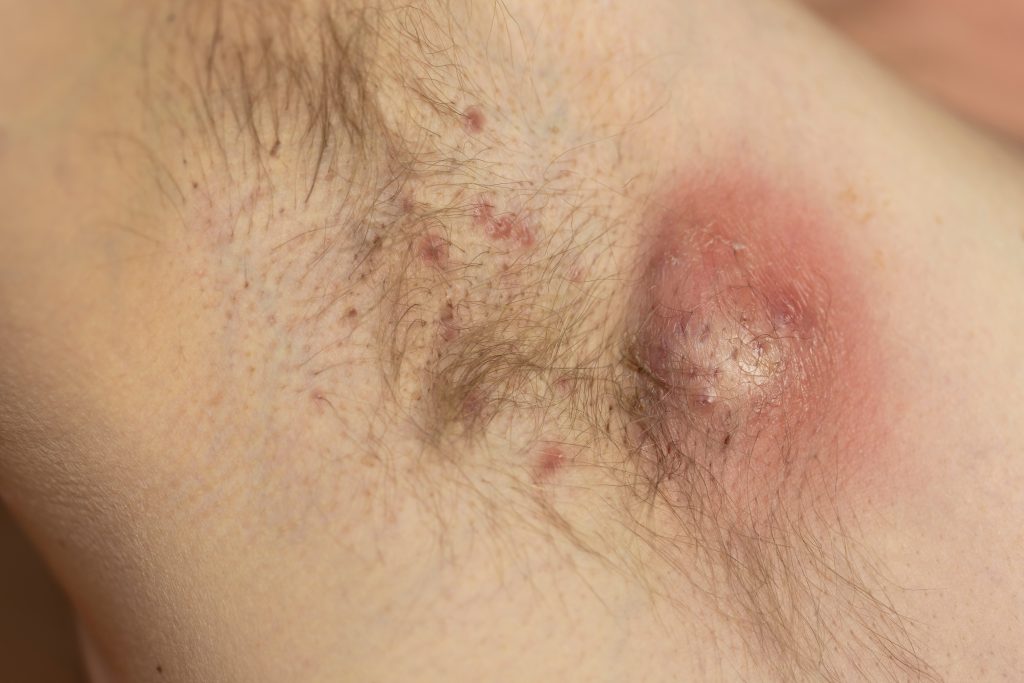
Earlier initiation of bimekizumab (Bimzelx, UCB) in hidradenitis suppurativa (HS) may be more likely to lead to complete resolution of inflammatory tunnels, new research suggests.
What’s more, earlier treatment with the interleukin (IL)-17 blocker may also lead to greater improvements in draining tunnels in biologic-naïve patients out to three years and improvements in total tunnels at one year.
These data were presented at the 2026 European Academy of Dermatology and Venereology (EADV) 2026 Congress in Vienna, Austria.
“Active inflammatory tunnels in HS are often associated with considerable pain, impact on quality of life, and irreversible structural damage,” says Amit Garg, MD, Founding Chair, Department of Dermatology at the Zucker School of Medicine at Hofstra/Northwell in North New Hyde Park, NY, in a news release. “The new data for bimekizumab at EADV show not only a greater impact on draining tunnels when used earlier but also provide the first evidence of an HS treatment reducing the number of total tunnels—suggesting a potential impact of bimekizumab on HS disease progression.”
At three years, 47.4% of patients with the shortest duration since diagnosis achieved International HS Severity Score System (IHS4) vs. 33.3% of those with the longest duration since diagnosis.
Biologic-naïve HS patients demonstrated improved draining tunnel outcomes. Specifically, complete draining tunnel resolution was achieved at three years in 67.3% of biologic-naïve patients vs. 47.7% of biologic-experienced patients. At one year, 30.7% of patients receiving bimekizumab were free of all tunnels vs. 14.5% at baseline.
Additional long-term, three-year data showed treatment with bimekizumab in people living with moderate-to-severe HS was associated with sustained improvements in quality of life. High proportions of patients receiving bimekizumab achieved improvements in stringent quality-of-life measures, as assessed by Dermatology Life Quality Index (DLQI) and HS Quality of Life (HiSQOL), sustained to three years.
The new data comes from the BE HEARD clinical trial program, including its open-label extension arm, BE HEARD EXT.
