
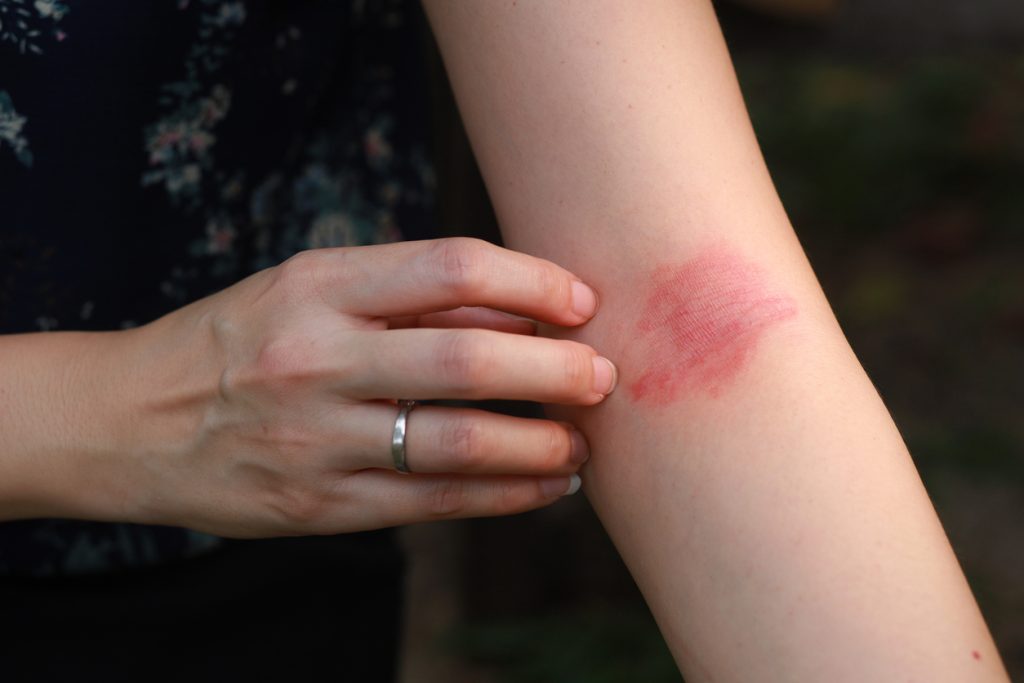
A timely diagnostic workup is warranted in adults with suspected atopic dermatitis (AD) who fail to respond to optimized, guideline-recommended care, with clinical expertise guiding the selection of appropriate tests.
This is the main message from a new Good Practice Statement on the diagnostic workup of adults with presumed AD unresponsive to therapy in the Journal of the American Academy of Dermatology.
The expert multidisciplinary workgroup applied Grading of Recommendations, Assessment, Development, and Evaluation methodology to issue guidance on AD in adults that is refractory to treatment.
Here’s what they found:
Patch testing can be considered in adult-onset dermatitis with an atypical distribution of lesions (e.g., hands, face, eyelids), chronic relapsing dermatitis that is unresponsive to or worsens despite standard AD therapy or new or worsening facial dermatitis.
A skin biopsy can distinguish presumed AD from other cutaneous, autoimmune, malignant, or inflammatory conditions, including pityriasis rubra pilaris, bullous pemphigoid, dermatitis, cutaneous lupus, or Cutaneous T-cell lymphoma (CTCL), particularly mycosis fungoides. “One or more skin biopsies may be indicated with a presentation of plaques, patches, papules, and tumors, or a diffuse or generalized pruritic erythema (erythroderma) and enlarged lymph nodes, or other systemic symptoms, as this is the commonly described clinical phenotype for CTCL, specifically mycosis fungoides, in adults with refractory AD later determined to be CTCL,” the guideline authors note.
Skin scraping can facilitate the accurate identification of infestations and infections that resemble or complicate AD, such as scabies or tinea. This is important as misdiagnosing scabies as AD often leads to inappropriate treatment with topical steroids, which can worsen infestation, they note.
“Microscopic examination of skin scrapings, obtained from burrows or papules, can reveal mites, eggs, or fecal pellets, confirming the diagnosis,” they write. “Additionally, skin scrapings with potassium hydroxide or fungal culture, or skin swabs for fungal culture, can identify dermatophyte infections like tinea corporis or tinea incognito and Malassezia-associated dermatoses, which may be mistaken for or occur concomitantly with AD, particularly when steroid use masks classic features.”
Skin swabs for bacterial, viral, or fungal cultures may be used when infection is suspected due to:
- Crusting
- Erythema with induration
- Oozing
- Vesicles
- Punched-out ulcers
- Pustules
“If superinfection with a virus, such as herpes simplex or varicella, is suspected, if available, viral polymerase chain reaction testing may produce faster results,” the authors note.
Phototesting with Ultraviolet A (UVA)/UVB exposures and photopatch testing may help identify abnormal photosensitivity patterns and support a diagnosis of photodermatitis, while laboratory studies such as a complete blood count with differential, comprehensive metabolic panel, autoimmune serologies, peripheral blood flow cytometry or clonality studies, may help when signs or symptoms of systemic disease or malignancy are present.
“Over-testing may increase healthcare costs, cause unnecessary patient burden, and result in diagnostic confusion, while under-testing may delay appropriate treatment and worsen outcomes,” they conclude. “Future research should focus on delineating high-yield diagnostic strategies, evaluating the impact of testing on clinical outcomes, and optimizing care pathways for this complex patient population.”
TDD’s AD Experts React
“The biggest practical message for me is to build in a diagnostic ‘time-out’ when presumed adult AD is not responding as expected,” says Peter A. Lio, MD, a Clinical Assistant Professor of Dermatology and Pediatrics at Northwestern University Feinberg School of Medicine and a partner at Medical Dermatology Associates of Chicago. First, confirm that treatment is truly optimized and being used, and then consider whether it is actually AD or whether something such as allergic contact dermatitis, infection/infestation, CTCL, or psoriasis is masquerading as or complicating it, he tells TDD. “The guidelines may appropriately lower the threshold for targeted patch testing, scraping/culture, and biopsy (sometimes repeat biopsy) when the phenotype or clinical course suggests them. This is particularly important before simply escalating systemic therapy.”
He stresses that unexpected treatment failure should trigger diagnostic reassessment, not just therapeutic escalation.
“Despite our best efforts, some patients may not adequately respond to AD therapy. Given the myriad of patient, physician, treatment, and disease factors that may lead to suboptimal response, these guidelines provide a helpful guide to prioritize select clinical and diagnostic factors when managing the ‘treatment-resistant’ patient with presumed AD,” shares Raj Chovatiya, MD, PhD, MSCI, an Associate Professor of Medicine at Rosalind Franklin University of Medicine and Science Chicago Medical School in North Chicago, IL, and Founder and Director of the Center for Medical Dermatology + Immunology Research in Chicago, IL. “Alongside individualized clinical judgment, these recommendations represent an important step forward in better standardizing our approaches in AD care.”
David Oberlin, MD, FAAD, a Dermatologist at Forefront Dermatology in Grand Rapids, MI, tells TDD that the new guidance mirrors his approach to refractory AD patients. “We know delays in both diagnosis and effective treatment occur, so reinforcing a framework that encourages diagnostic reconsideration without unnecessarily delaying appropriate therapy is important,” he says.
Dr. Oberlin agrees that further diagnostic testing in these patients should remain selective. “I would not routinely patch test the majority of patients with otherwise typical AD, but it becomes much more valuable in refractory disease, atypical distributions, or when allergic contact dermatitis is specifically suspected,” he says. “Similarly, when biopsy is warranted, I often favor two shave biopsies from representative sites rather than a single punch, particularly when considering CTCL or other predominantly epidermal processes [as] this allows sampling of multiple sites while remaining timely, cost-effective, and relatively low morbidity.”
