
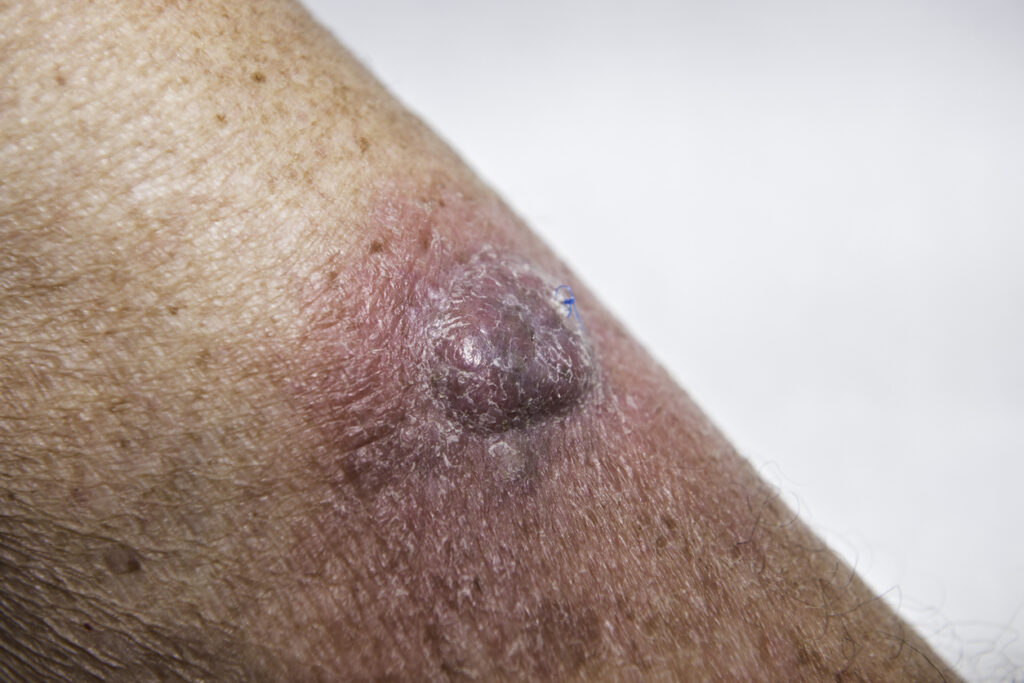
Natera, Inc. is partnering with Kupando Therapeutics for a Phase 1 clinical trial assessing circulating tumor DNA (ctDNA) dynamics with Latitude in advanced skin cancers.
Under the agreement, Natera’s Latitude tissue-free assay for molecular residual disease (MRD) detection will be used in Kupando’s clinical trial of its lead immunotherapy candidate, KUP-101. The trial will assess serial ctDNA dynamics as part of treatment response monitoring. Patients with advanced tumors across multiple skin cancers will be treated with KUP-101, and Latitude MRD testing will be performed at multiple timepoints.
Following the successful dosing of the first patient, Kupando’s safety committee has approved the ongoing enrollment of further patients across the activated clinical sites, including oncology centers in Germany.
KUP-101 is designed to activate the innate immune system and induce trained immunity. It has potential as a tissue-agnostic treatment across multiple solid tumor types, both as a stand-alone therapy and in combination with other agents. The Latitude test will assess treatment response in the trial.
“Dosing our first patient is a defining inflection point in Kupando’s history,” says Johanna Holldack, MD, Founder and Chief Executive Officer at Kupando Therapeutics, in a news release. “By leveraging the power of innate immune stimulation and the induction of trained immunity, KUP-101 represents a fundamentally different way of approaching hard-to-treat cancers. Natera’s Latitude test can provide valuable insights into treatment response dynamics, helping us better understand the molecular activity of this novel therapeutic approach and advance our clinical development program for patients with advanced solid tumors.”
“We are pleased to work with Kupando as they advance this promising first-in-class approach to innate immune activation,” adds Eric Matthews, General Manager of Biopharma at Natera. “Latitude’s capabilities make it ideally suited to evaluate ctDNA dynamics across diverse solid tumor types, and we look forward to generating molecular insights that can support Kupando’s development of KUP-101 and ultimately help patients with difficult-to-treat cancers.”
