
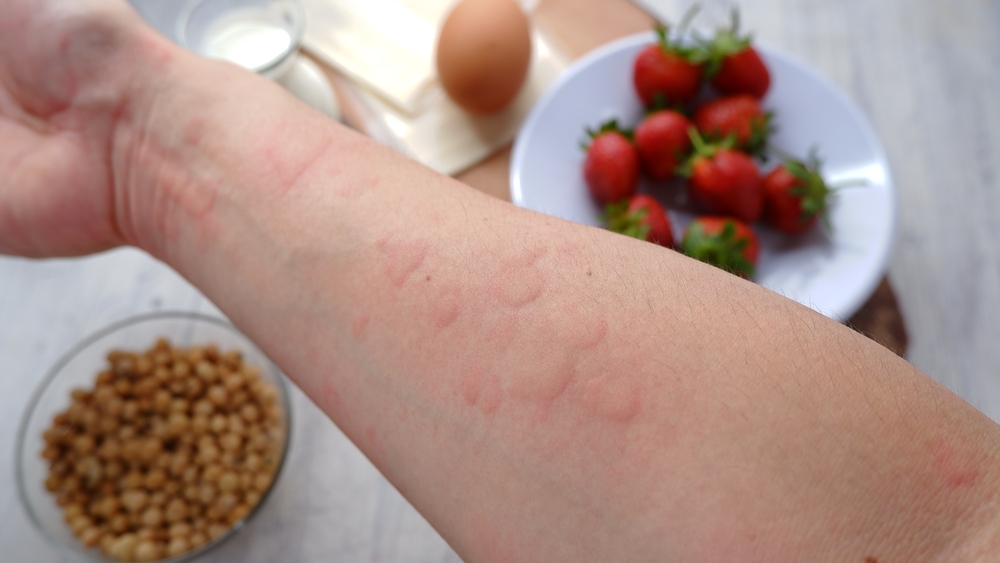
Celldex completed enrollment in its global Phase 3 program of barzolvolimab in chronic spontaneous urticaria (CSU), which consists of two Phase 3 trials—EMBARQ-CSU1 and EMBARQ-CSU2.
Barzolvolimab uniquely targets the mast cell. The program included 1,939 patients with antihistamine-refractory CSU, including patients with advanced therapy experienced/refractory CSU. The studies comprised 43 countries and more than 500 sites.
“Completing enrollment in these large Phase 3 CSU studies six months ahead of guidance highlights the significant unmet need in CSU and speaks to the excitement from patients and physicians about barzolvolimab and its potential as a best-in-disease treatment,” says Anthony S. Marucci, Co-founder, President, and Chief Executive Officer of Celldex, in a news release. “We are extremely grateful to these patients, their families, and their treating physicians for their enthusiasm and participation in the EMBARQ-CSU1 and EMBARQ-CSU2 studies. We look forward to reporting top-line results later this year and remain focused on completing preparations to support bringing this much-needed treatment to more than 1.8 million patients in the United States suffering from CSU.”
In a Phase 2 study of barzolvolimab in CSU, up to 51% of patients on study had a complete response and were symptom-free Weekly Urticaria Activity Score 7 (UAS7=0; no itch/no hives) at 12 weeks, which continued to deepen over 52 weeks of active therapy to up to 71% of patients.
This profound clinical benefit continued even after patients were off therapy with up to 41% of patients reporting complete response seven months after receiving their last dose. Patients also reported dramatic improvements in angioedema control and quality of life.
At 12 weeks, up to 65% of barzolvolimab-treated patients were angioedema-free Angioedema Activity Score over 7 (AAS7=0), which increased to up to 77% at Week 52 and remained at up to 64% seven months after their last dose. At 12 weeks, up to 67% of patients treated with barzolvolimab reported their CSU had no impact on their quality of life (Dermatology Life Quality Index [DLQI] DLQI 0/1), which increased to up to 82% at Week 52 and remained at up to 48% seven months after their last dose.
The Phase 3 Program is designed to establish the efficacy and safety of barzolvolimab in adult patients with CSU who remain symptomatic despite H1 antihistamine treatment. Both Phase 3 trials are randomized, double-blind, placebo-controlled, parallel group, global studies. A total of 1,939 patients were randomized (n=963 EMBARQ-CSU1; n=976 EMBARQ-CSU2) evenly to barzolvolimab 150mg every four weeks (following a 300mg loading dose), barzolvolimab 300mg every eight weeks (following a 450mg loading dose) or placebo for 52 weeks. At 24 weeks, patients on placebo will be re-randomized to active treatment across both dosing groups.
The primary endpoint of the study will evaluate the clinical effect of barzolvolimab in reducing urticaria activity (weekly urticaria activity score; UAS7) at Week 12. The study is designed to detect a clinically meaningful difference between each of the active arms vs. placebo in the overall population as well as in the subpopulation of omalizumab refractory participants. The primary endpoint analysis will be performed when all patients have completed the placebo-controlled portion of the study at 24 weeks. A global Phase 3b long-term extension study (LTE) has been established and is ongoing, which patients can enter following completion of the EMBARQ-CSU Phase 3 trials.
