
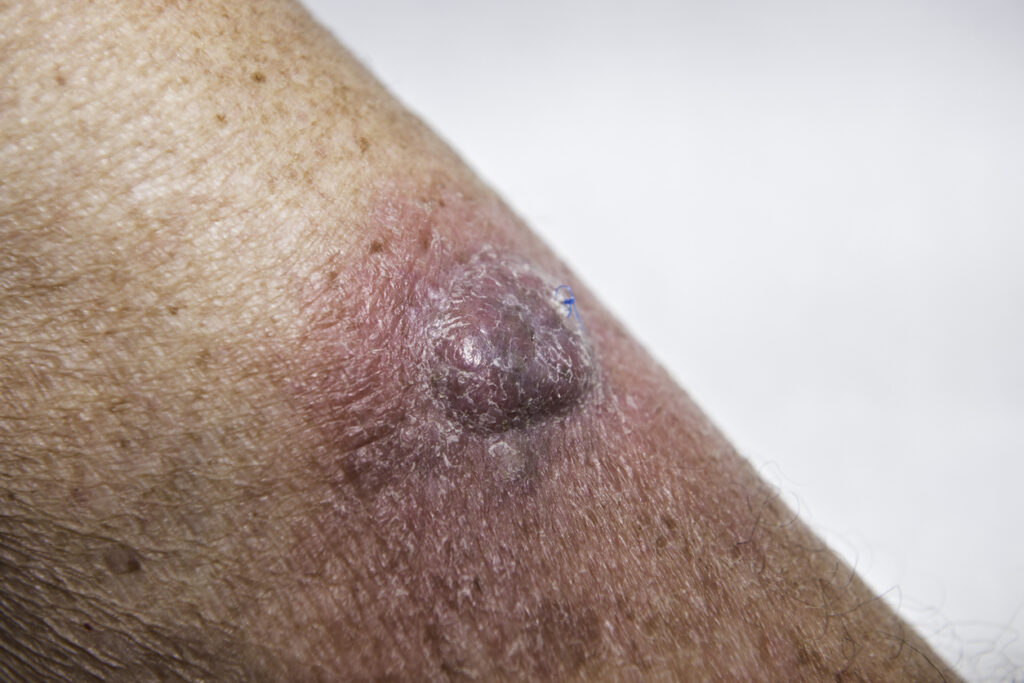
A topical cream that blocks LSD1 may suppress tumor growth in cutaneous squamous cell carcinoma (cSCC), according to a new preclinical study in the Journal of Clinical Investigation.
The cream was developed by researchers at the Perelman School of Medicine at the University of Pennsylvania in Philadelphia, PA.
For the study, Penn researchers formulated a low‑dose topical inhibitor of LSD1, an enzyme that normally acts as a “brake” on certain immune‑activating pathways in epidermal cells. By “lifting the brake,” the cream prompted skin cells to signal for immune help. These cells played a key role in slowing down tumor growth.
In the study, blocking retinoic acid signaling reversed many of the skin-level changes induced by the cream. In addition, destroying CD4⁺ T cells eliminated its tumor suppression. The findings suggest the therapy works by priming communication between skin cells and the immune system to enable targeted anti‑tumor responses.
The researchers are also exploring whether taking LSD1 inhibitors orally or in an injection could enhance the efficacy of immune checkpoint cancer therapies.
“What’s striking is that a simple topical cream can use the skin’s own machinery to recruit and activate immune cells that attack tumors,” says senior author Brian C. Capell, MD, PhD, an assistant professor of Dermatology at Penn, in a news release. “We are carrying out some more studies to refine the formulation this coming year, and we hope to begin a Phase 1 clinical trial in the next 1-2 years. Ideally, this cream could be used directly on cancerous and precancerous spots.”
