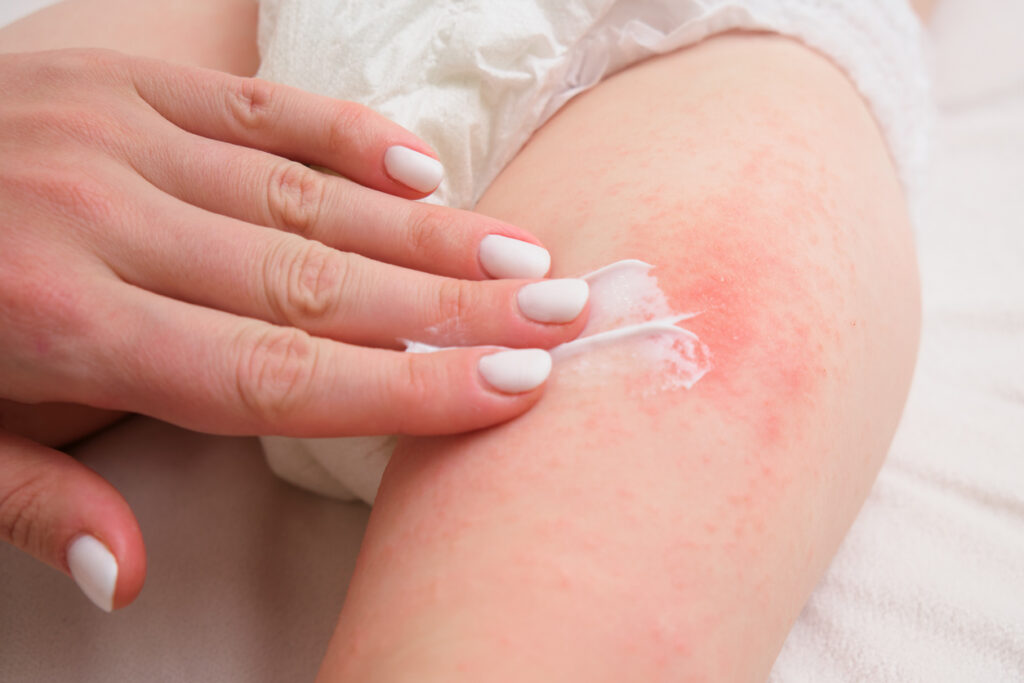
Roflumilast cream 0.05% (Zoryve, Arcutis) performs well in infants with atopic dermatitis (AD), with results comparable to those seen in older kids, according to new research presented at the 2026 Fall Clinical Dermatology Conference in Las Vegas, NV.
The Phase 2 INTEGUMENT-INFANT study assessed safety, tolerability, and exploratory in 101 infants with AD over four weeks.
Roflumilast cream 0.05% was well-tolerated, with no serious adverse events and no evidence of application-site irritation for at least 97.9% of infants. In addition, roflumilast cream 0.05% demonstrated rapid disease clearance through four weeks of treatment, the study showed.
Among infants who completed four weeks of treatment, 34.4% achieved Validated Investigator’s Global Assessment for Atopic Dermatitis (vIGA-AD) Success, defined as a score of 0 (Clear) or 1 (Almost Clear) with a ≥2-grade improvement from baseline. Additionally, IGA-Scalp Success, defined as a score of 0 (Clear) or 1 (Almost Clear) with a ≥2-grade improvement from baseline, was achieved by 67.5% of infants. Also, 58.3% of infants achieved at least a 75% reduction from baseline in Eczema Area and Severity Index (EASI-75) at Week 4.
Caregivers reported rapid itch improvement, with 46.6% of infants achieving at least a 25% improvement in pruritus (itch) from baseline within 10 minutes of application, as assessed by caregivers, based on the Dynamic Pruritus Scale (DPS-25), the study showed.
The US Food and Drug Administration (FDA) has set a Prescription Drug User Fee Amendments (PDUFA) target action date of February 23, 2027, for roflumilast cream 0.05% in infants aged three to 24 months with mild-to-moderate AD. The next-generation phosphodiesterase 4 (PDE4) inhibitor is currently indicated for topical treatment of mild-to-moderate AD in kids aged two to five and adult and pediatric patients aged six and older.
The Dermatology Digest (TDD) talked to Patrick Burnett, MD, PhD, FAAD, Chief Medical Officer of Arcutis Biotherapeutics, about the study results and the pressing need for non-steroidal topical therapies for infants with AD.
TDD: What are the potential benefits of a nonsteroidal topical treatment for infants with AD?
Patrick Burnett, MD, PhD: “Infants with atopic dermatitis are particularly vulnerable to symptoms such as intense itch and sleep disruption, and managing the condition can be especially challenging for parents and caregivers given the very limited FDA-approved treatment options for this age group. A nonsteroidal topical treatment, like ZORYVE, offers the potential for a safe and effective long-term treatment option that can support improvements in disease symptoms and that can be used anywhere disease is present on the body, including sensitive areas like the face and skin folds, without the limitations associated with corticosteroids.”
TDD: What unmet treatment needs remain for infants with atopic dermatitis and their families?
Dr. Burnett: “Today, few steroid-free, topical, FDA-approved treatments exist for infants with atopic dermatitis, and there is a significant unmet need for therapies that are safe, effective, suitable for long-term use, and that can be applied anywhere on the body. Families and clinicians often have limited options when trying to manage a chronic condition that begins early in life and affects sensitive areas such as the face and skin folds. If approved, ZORYVE cream 0.05% would help address these critical gaps for very young children and the families who care for them.”
TDD: How often do parents ask for nonsteroidal treatments for their infants, and what concerns drive those requests?
Dr. Burnett: “Parental concerns about corticosteroids and potential side effects are becoming more common. Some of the families I work with worry about relying on topical corticosteroids to manage symptoms in the long term. Requests for steroid-free options tend to reflect a desire of parents for treatments that have a safety and ease of use that are aligned with how they want to manage a chronic condition in their very young children.”