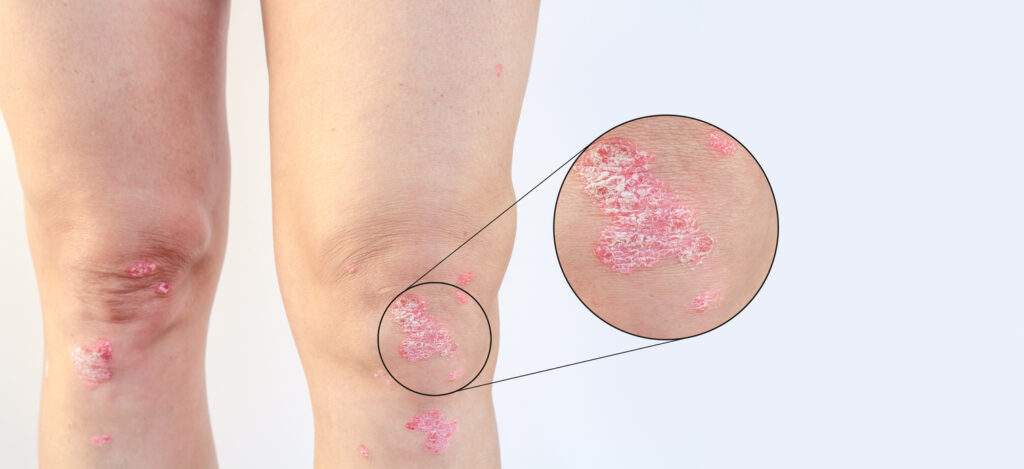
The European Commission granted approval to deucravacitinib (Sotyktu, BMS), alone or in combination with methotrexate, for the treatment of active psoriatic arthritis (PsA) in adults who have had an inadequate response or who have been intolerant to a prior disease-modifying antirheumatic (DMARD) therapy.
This EU approval is based on positive results from the pivotal POETYK PsA-1 and POETYK PsA-2 Phase 3 clinical trials, which evaluated the efficacy and safety of deucravacitinib 6mg once daily in adults with active PsA. In both trials, treatment with deucravacitinib resulted in significant improvement in disease activity, as measured by American College of Rheumatology (ACR) 20 (the primary endpoint) and Minimal Disease Activity (MDA) (key secondary endpoint).
The overall safety profile of deucravacitinib observed in individuals with active psoriatic arthritis was generally consistent with the safety profile in those with plaque psoriasis. The most common adverse reactions (≥1%) are upper respiratory infections, increased blood creatine phosphokinase, herpes simplex infections, oral ulcers, acneiform rash, and folliculitis.
Deucravacitinib requires the following special warnings and precautions for use: infections; pre-treatment evaluation for tuberculosis; malignancies; major adverse cardiovascular events, deep venous thrombosis and pulmonary embolism; immunizations; and excipients (lactose, sodium).
In clinical trials, health-related quality of life was assessed by the 36-Item Short Form Health Survey (SF-36). Patients treated with deucravacitinib showed improvements in SF-36 Physical Component Summary (PCS) score at Week 16 compared to placebo (key secondary endpoint), with improvements maintained in both POETYK PsA trials up to Week 52.
Deucravacitinib was approved by the US Food and Drug Administration (FDA) on March 6, 2026, for the treatment of adults with active PsA. Deucravacitinib was first approved in 2022 by the US FDA for the treatment of adults with moderate-to-severe plaque psoriasis (PsO) who are candidates for systemic therapy or phototherapy. In 2023, Sotyktu was approved by the European Commission for the treatment of adults with moderate-to-severe plaque psoriasis who are candidates for systemic therapy. Since then, multiple global regulatory authorities have approved deucravacitinib for that indication.
Efficacy Results in Adults with Psoriatic Arthritis
| POETYK PsA-1 | POETYK PsA-2 | |||||
| Sotyktu
(N = 336) |
Placebo
(N = 334) |
Difference from Placebo
(95% CI) |
Sotyktu
(N = 312) |
Placebo
(N = 312) |
Difference from Placebo
(95% CI) |
|
| ACR20 Response | ||||||
| Week 16 (%) | 54.2 | 34.1 | 20.0 (12.7, 27.4) a | 54.2 | 39.4 | 14.8 (7.0, 22.5) a |
| Week 52 (%) * | 76.3 (212/278) | 71.9 (194/270) | ||||
| ACR50 Response | ||||||
| Week 16 (%) | 24.7 | 13.5 | 11.2 (5.3, 17.1) c | 28.8 | 16.3 | 12.5 (6.0, 19.0) c |
| Week 52 (%) * | 48.9 (136/278) | 47.0 (127/270) | ||||
| ACR70 Response | ||||||
| Week 16 (%) | 11.6 | 5.4 | 6.2 (2.0, 10.4) d | 10.6 | 5.4 | 5.2 (0.9, 9.4) d |
| Week 52 (%) * | 30.2 (84/278) | 30.0 (81/270) | ||||
| Minimal disease activity (MDA)** Response | ||||||
| Week 16 (%) | 19.0 | 10.2 | 8.9 (3.6, 14.2) b | 25.6 | 14.7 | 10.9 (4.6, 17.1) b |
| Week 52 (%) * | 40.7 (114/280) | 48.3 (130/269) | ||||
| Non-responder imputation (NRI) was used up to Week 16. After Week 16, observed data is shown with no imputation. | ||||||
| N is number of randomized patients. | ||||||
| a p≤0.0002 | ||||||
| b p≤0.001 | ||||||
| c Nominal p≤0.0002 | ||||||
| d Nominal p≤0.02 | ||||||
| * Data are shown for available subjects in the format of % (n/N) observed | ||||||
| ** Minimal disease activity (MDA) = five out of seven outcomes: tender joint count ≤1; swollen joint count ≤1; Psoriasis Activity and Severity Index ≤1 or body surface area ≤3%; patient pain visual analogue scale (VAS) ≤15; patient global disease activity VAS ≤20; Health Assessment Questionnaire Disability Index ≤0.5; tender entheseal points ≤1 | ||||||