
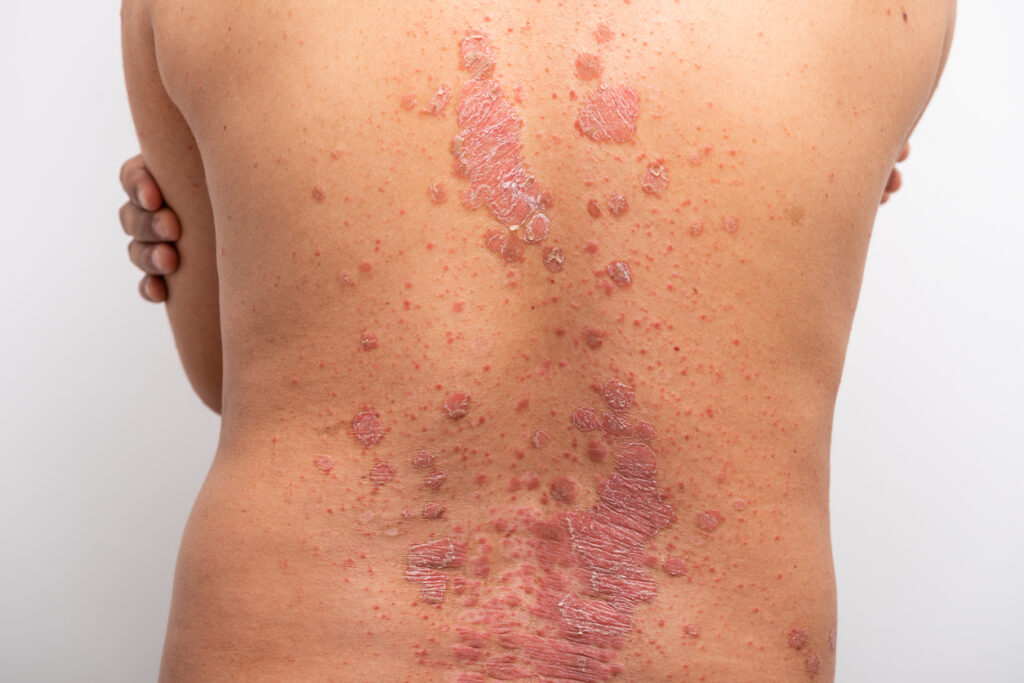
Pantethine, a vitamin B5 derivative, limits the activity of immune cells that are key contributors to autoimmune diseases such as psoriasis, according to a study published in the Journal of Experimental Medicine.
The study, from researchers in China, suggests that pantethine reduces skin inflammation in mice and shows potential benefits in humans when used in combination with other treatments.
Dendritic cells are specialized immune cells that help to coordinate the different parts of the immune system. They can engulf and present foreign antigens to activate highly specific T cells, as well as secrete a variety of immune-signaling molecules to recruit other types of immune cells and promote inflammation. Because of this central role in directing immune responses, aberrant activation of dendritic cells is thought to underlie a variety of autoimmune diseases, including psoriasis.
“Emerging evidence highlights that metabolic pathways and their associated metabolites play vital roles in regulating immune cell function and autoimmune progression,” says Wei-Na Zhang, a researcher at the State Key Laboratory of Biomedical Analysis in Beijing, China, who co-led the study, in a news release. “But therapeutic strategies targeting metabolism in inflammatory diseases remain underexplored.”
Zhang and colleagues found that the levels of metabolic enzymes known as Vanins are elevated in the dendritic cells of patients with psoriasis and several other autoimmune diseases. Depleting these enzymes inhibited dendritic cell activation and limited their ability to activate T cells. Moreover, treating mice with a drug that inhibits Vanins prevented the animals from developing psoriasis.
Vanin enzymes convert the metabolite pantethine into vitamin B5, an essential nutrient required for cellular energy production. Pantethine itself is a widely available nutritional supplement often used to lower blood cholesterol levels due to its ability to inhibit cholesterol synthesis. Intriguingly, cholesterol can promote the activation of dendritic cells, and high blood cholesterol is a major risk factor for the development of psoriasis.
Zhang and colleagues determined that increased Vanin activity in dendritic cells reduces panthetine levels, leading to increased cholesterol synthesis and dendritic cell hyperactivation. Replenishing pantethine levels reversed this process, lowering the accumulation of cholesterol and suppressing dendritic cell activation.
“We found that pantethine administration effectively alleviated psoriasis in mice, suggesting that insufficient pantethine levels may be the crucial contributor to hyperactivation of dendritic cells and autoimmune inflammation following the up-regulation of Vanins,” Zhang says, in the news release.
The researchers therefore initiated a small-scale trial of pantethine supplementation in 24 human psoriasis patients. Every patient was treated with topical calcipotriene/betamethasone ointment, but half of the patients also received pantethine tablets. Over the course of 12 weeks, patients given the additional pantethine treatment showed improved symptoms, particularly if they had elevated blood cholesterol levels to begin with.
“Our investigator-initiated clinical trial demonstrated encouraging therapeutic efficacy of pantethine as an adjunctive therapy in psoriasis, but these findings should be interpreted as proof-of-concept for clinical feasibility rather than direct mechanistic validation,” Zhang says. “Overall, our study uncovers the Vanin–pantethine–cholesterol axis as a key metabolic pathway governing dendritic cell activation and provides a foundation for therapeutic strategies targeting several dendritic cell-mediated autoimmune diseases.”
