
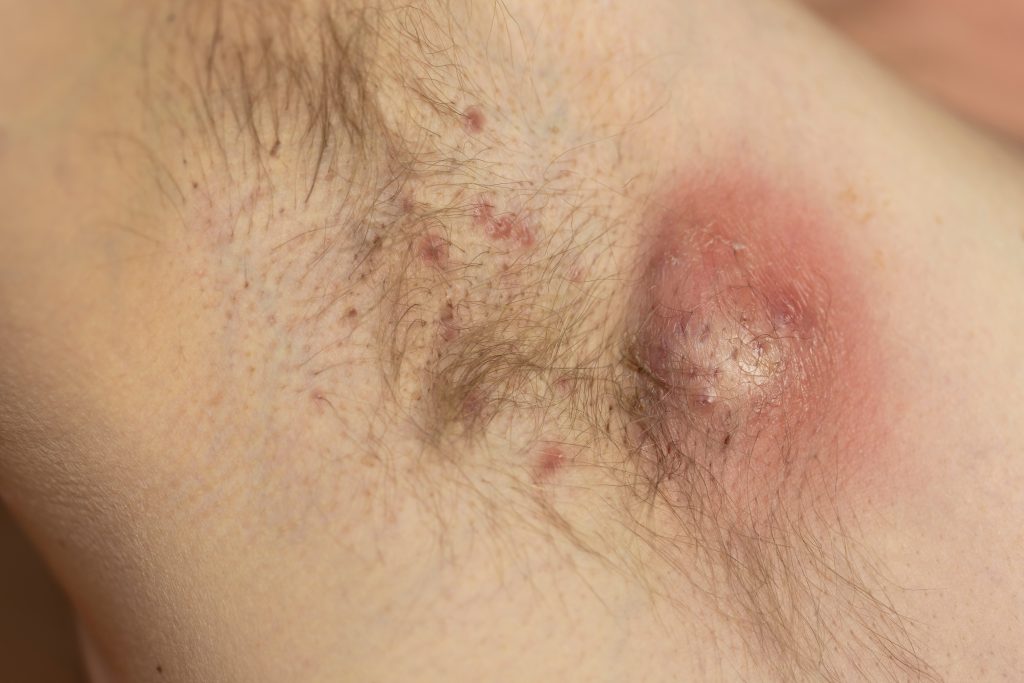
Biologics including adalimumab (Humira, AbbVie), bimekizumab (Bimzelx, UCB), infliximab, and secukinumab (Cosentyx, Novartis) are strongly recommended for people with moderate-to-severe hidradenitis suppurativa (HS), according to the first-ever joint guidelines of care for HS from the American Academy of Dermatology (AAD) and the Hidradenitis Suppurativa Foundation.
Compiled by a work group of 13 experts, including 12 board-certified dermatologists, the newly released guidelines, published in the Journal of the American Academy of Dermatology (JAAD), include 37 evidence-based recommendations designed to treat chronic HS disease and acute HS flares.
Evidence does not support the use of step therapy in HS care as it delays access to appropriate treatment, and biologics are strongly recommended for individuals with moderate-to-severe HS.
Conditional Recommendations of Care
- Topical therapies (clindamycin, resorcinol, and ruxolitinib [Opzelura, Incyte]) are applied to the skin to reduce abscesses and the severity of symptoms.
- Systemic antibiotics (doxycycline, tetracycline, clindamycin in combination with rifampin, and ertapenem [Ivanz, Merck & Co.]) work throughout the body to decrease severity of symptoms and improve quality of life.
- Hormone therapy (spironolactone) is taken by mouth to decrease severity.
- Systemic therapies (upadacitinib [Rinvoq, AbbVie] and short-term systemic steroids) are taken by mouth and work throughout the body for individuals with moderate-to-severe HS to reduce disease activity and pain.
- Continuing injectable biologics (adalimumab [Humira, AbbVie]) is recommended for individuals with moderate-to-severe HS undergoing surgery.
In-office procedures can be especially helpful if abscesses and tunnels have formed in the skin, including:
- Deroofing
- Incision and drainage to treat painful abscesses
- Surgical removal of an area of affected skin for abscesses or tunnels that persist or continue to come back
- Laser hair removal for fewer flares
- Botulinum toxin to reduce flares
- Intralesional triamcinolone to treat painful, flaring bumps
Conditional recommendations were made against the use of oral retinoids (acitretin and isotretinoin), certain biologics (etanercept, guselkumab [Tremfya, Janssen Biotech, Inc], risankizumab [Skyrizi, AbbVie], and vilobelimab [Gohibic, InflaRx), systemic therapies (avacopan [Tavneos, Amgen] and methotrexate and azathioprine as primary treatments), and radiotherapy for pediatric and adolescent HS patients. In addition, there is insufficient evidence to support oral contraceptive pills or finasteride for HS management.
Supportive Management
Treatments to manage sudden pain include warm or cool compresses, topical lidocaine, acetaminophen, nonsteroidal anti-inflammatory drugs like aspirin and ibuprofen, steroid injections, incision and drainage, and short-term steroids that work throughout the body. Opioids can be used if the pain doesn’t decrease through other treatments.
Long-lasting pain can be managed with serotonin norepinephrine reuptake inhibitors (SNRIs), tricyclic antidepressants, psychotherapy, proper wound care, and nerve pain medications such as gabapentin and pregabalin, the guidelines state.
There is insufficient evidence to support weight reduction and glucagon-like peptide-1 receptor agonists (GLP-1RAs) for HS treatment. There is also insufficient evidence that specific diet plans—intermittent fasting, the Mediterranean diet, the yeast exclusion diet, and the dairy-free diet—help manage HS. However, a heart-healthy diet of fruits and vegetables, whole grains, healthy fats, and lean proteins remains important for reducing heart and diabetes risk for individuals with HS.
Complementary Medicine
Conditional recommendations were made for complementary and alternative medicine, including vitamin D supplements for individuals with deficiencies, and zinc supplements. These supplements, taken under a doctor’s supervision, may reduce lumps and tunnels and relieve pain.
“These guidelines establish an evidence-based standard of care for HS, giving patients, dermatologists, and payers a shared roadmap for what high-quality HS care looks like,” says San Francisco, CA-based Dermatologist Haley B. Naik, MD, FAAD, Co-chair of the Hidradenitis Suppurativa Guideline Work Group and President of HSF, in a news release. “Every person living with HS deserves care that meets this standard.”
