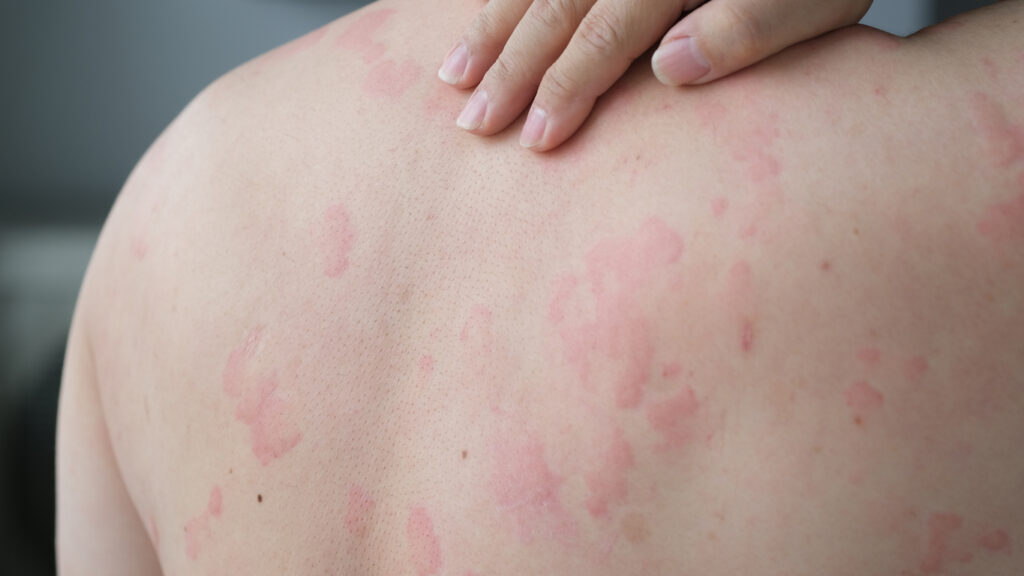
Barzolvolimab (Celldex) produces prolonged improvements for patients with chronic spontaneous urticaria (CSU), according to Phase 2 data slated for presentation at the upcoming American Academy of Allergy, Asthma and Immunology (AAAAI) Annual Meeting in Philadelphia, PA.
Barzolvolimab is a humanized monoclonal antibody that specifically binds the receptor tyrosine kinase KIT with high specificity and potently inhibits its activity, which is required for mast cell function and survival.
After 52 weeks of treatment with barzolvolimab, participants saw continued treatment efficacy for an additional 28 weeks after their last dose.
In this double-blind, placebo-controlled trial, patients with antihistamine refractory CSU were enrolled and treated for up to 52 weeks. Some participants were randomized to treatment with either 150mg of barzolvolimab every four weeks or 300mg of barzolvolimab every eight weeks, and 78 patients completed 52 weeks of treatment. Of these, 70.5% of participants achieved at least well-controlled disease with a Urticaria Activity Score over 7 days [UAS7<=6]) by Week 52. This exploratory analysis was conducted in the 48 participants who had a UAS7<6 at Week 52 and UAS7 scores at Week 76.
At study entry, 70.9% of these patients had severe disease, but at Week 52, 87.3% had a complete response to treatment, and 12.7% had well-controlled urticaria. An additional 28 weeks after receiving their last dose, at least mild disease was apparent in 81% of participants, with 50% having a complete response and 18.8% having well-controlled disease.
The researchers found that the prolonged, off-treatment efficacy was maintained despite clearance of barzolvolimab and normalization of serum tryptase, a mast cell biomarker. Half of the participants had continuous, well-controlled disease with mean (SD) UAS7 0.4(1.1); mean(SD) Dermatology Life Quality Index (DLQI) 1.17(3.50) and 83.3% DLQI of 0/1 (no impact of disease on quality of life) at Week 76, the study showed.
Because of the prolonged off-treatment efficacy observed 28 weeks after the last dose of barzolvolimab, researchers suggest a potential disease modification.
“I believe barzolvolimab’s unique ability to target the underlying driver of CSU—the mast cell—resulted in unprecedented rapid, profound, and durable complete responses in this large Phase 2 study,” says lead author Martin Metz, MD, Professor, Department of Dermatology and Allergy, Head of Translational Research, and Deputy Head of Clinical Trials at Charité – Universitätsmedizin in Berlin, Germany, in a news release.
“In this sub analysis of patients who completed 52 weeks of treatment with at least well-controlled disease, the majority had a complete response seven months after their last dose, and for those who did experience disease return, it was generally mild—these results are especially impressive given most of these patients entered the study with severe disease. This prolonged, off-treatment efficacy is suggestive of a disease-modifying mechanism and demonstrates the significant potential of barzolvolimab to become a transformative treatment option for patients suffering from CSU.”