
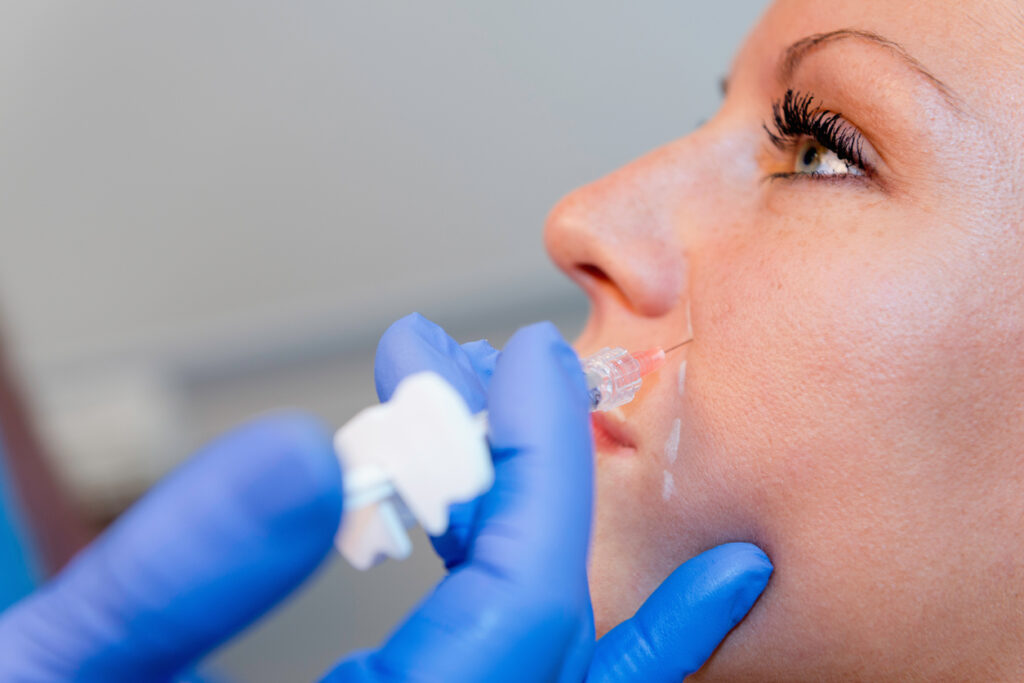
Vascular ultrasound can aid in treating complications from cosmetic filler injections, according to research presented at the 2025 annual meeting of the Radiological Society of North America (RSNA) in Chicago, IL.
Study Author Rosa Maria Silveira Sigrist, MD, an Attending Radiologist and PhD Candidate at the University of São Paulo Department of Radiology in São Paulo, Brazil, and colleague studied filler-related vascular complications including vascular occlusion across four radiology centers, one dermatology center and one plastic surgery center between May 2022 and April 2025, evaluating vascular ultrasound findings in 100 patients.
The most common finding—in 42% of cases—was absent flow to perforator vessels. In 35% of cases, flow was absent in major blood vessels, and this finding was significantly associated with lateral nasal artery involvement. Areas around the nose are particularly risky injection sites, because nasal vessels communicate with external carotid system via the facial arteries and via the internal carotid system through the retina of the eye, Dr. Sigrist cautions. Severe complications caused by damage to these vessels can include blindness and stroke.
The new study provides a framework that can help radiologists recognize these patterns, make timely decisions, and treat with precision before serious damage occurs.
To treat filler-related complications, clinicians inject hyaluronidase. “If injectors are not guided by ultrasound, they treat based on where the clinical findings are and inject blindly,” Dr. Sigrist says. “But if we can see the ultrasound finding, we can target the exact place where the occlusion occurs. Rather than flooding the area with hyaluronidase, we can do guided injections that use less hyaluronidase and provide better treatment results.”
Ultrasound is also a useful tool for guiding the filler injections themselves, increasing the injector’s precision so that less filler is needed and complications are less likely from the start, Dr. Sigrist adds.