
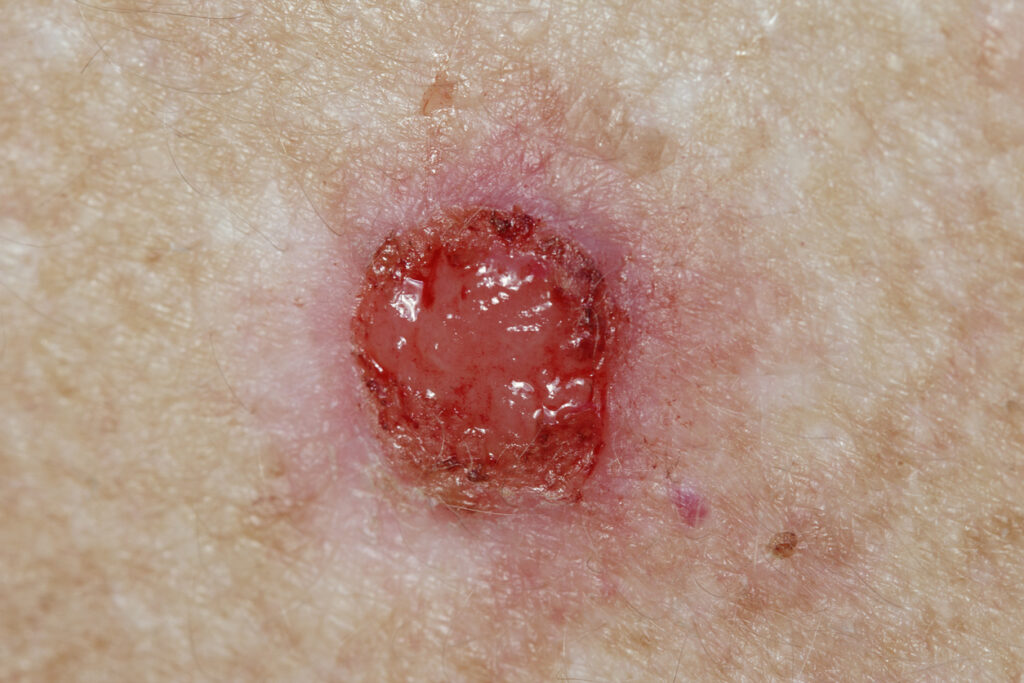
Biofrontera Inc. has submitted a Supplemental New Drug Application (sNDA) to the U.S. Food and Drug Administration (FDA) for approval of Ameluz-photodynamic therapy (PDT) for superficial basal cell carcinoma (sBCC).
The submission includes the full efficacy data sets from the Phase 3 treatment phase and the one-year follow-up, together with an integrated safety assessment combining data from Biofrontera’s U.S. and European basal cell carcinoma clinical studies. The filing seeks to expand the Ameluz label to include treatment of sBCC treatment with PDT using its BF-RhodoLED or RhodoLED XL red light lamps.
The double-blind, randomized, placebo-controlled, multi-center Phase 3 study evaluated the safety and efficacy of Ameluz-PDT in 187 patients with one or more clinically and histologically confirmed superficial BCCs. Participants received one cycle of two PDT treatments (either Ameluz-PDT or placebo-PDT) given one to two weeks apart. If required, a second treatment cycle was repeated at three months.
The study’s primary endpoint was a composite measure of complete clinical and histological clearance of one preselected “main target lesion” (MTL) at 12 weeks after the start of the last PDT cycle. This rigorous target was achieved with a 65.5% clearance rate in the Ameluz-PDT arm (95/145 subjects) compared to 4.8% in the placebo-PDT arm (2/42 subjects), a highly significant statistical difference.
Key secondary endpoints demonstrated even higher efficacy with (i) complete histological clearance of the MTL seen in 75.9% (110/145) of patients with Ameluz compared to 19.0% (8/42) with placebo, (ii) complete clinical clearance of the MTL achieved in 83.4% (121/145) of patients treated with Ameluz compared to 21.4% (8/42) with placebo, and (iii) total clearance of all sBCC lesions in 64.1% of subjects treated with Ameluz compared to 4.8% with placebo.
Patient-reported outcomes also supported these findings, with a large majority—85.5%—rating the overall treatment satisfaction and aesthetic outcome with Ameluz-PDT as very good or good. One-year follow-up data further reinforced the durability of response and the long-term cosmetic advantages of Ameluz-PDT.
“We are delighted that these highly significant results align with those found in the European studies and that we were able to submit this data package to FDA and seek an extension of the label to include sBCC,” says Dr. Hermann Luebbert, CEO and Chairman of Biofrontera Inc, in a news release. “If approved, this would expand the Ameluz indication to cutaneous oncology and would represent a significant milestone in our mission to become market leaders in the field of PDT.”
Is Pain-free PDT Possible?
Maui Derm Founder George Martin, MD, shares tips on how to optimize efficacy and minimize pain with photodynamic therapy (PDT), including pretreating patients with 10,000 IU of Vitamin D3 for two weeks before treatment initiation, at Maui Derm Caribbean 2025.