
By Denise Mann, MS
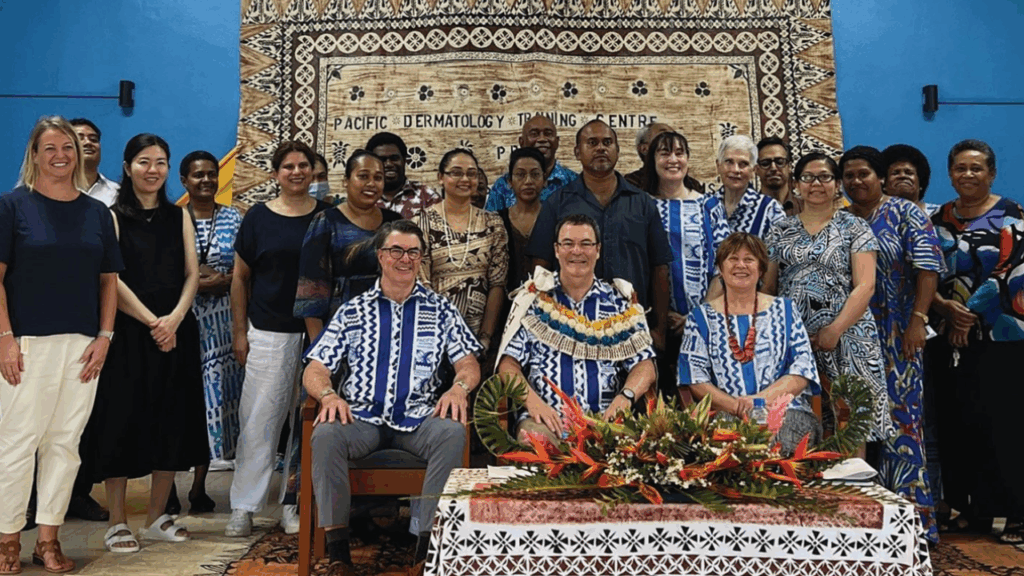
The doors to the Pacific Dermatology Training Centre (PDTC) at Tamavua Twomey Hospital in Suva, Fiji, first opened in 2019, and since that time, the Centre has grown considerably in both breadth and reach.
Founded by Pacific Dermatology Ltd, an Australian nonprofit organization, and Fiji National University (FNU), the PDTC aims to address the critical shortage of dermatology services in the Pacific Island Nations, which include Papua New Guinea, the Solomon Islands, Kiribati, Samoa, and other Pacific Island Nations.
Since its inception, 11 doctors from the region (six from the Pacific Islands, and five from Fiji) have earned FNU’s one-year Postgraduate Diploma in Dermatology, and seven are currently pursuing its master’s program. So far, three people have graduated from the master’s program. All trainees are doctors who have graduated with an MBBS or the equivalent and have had a few years of experience working as a doctor. They come to the PDTC to upgrade their knowledge and skills in dermatology.
Thanks to the influx of trainees and graduates, the Centre’s patient reach has grown from treating 800 patients a month in 2019 to more than 2,000 each month in 2024.
The International League of Dermatological Societies (ILDS) recently committed $1 million to Pacific Dermatology Ltd to increase access to care and improve treatment for individuals living with skin diseases throughout the region. “It’s now our sixth year of its operation, and everything is going well,” Meciusela Tuicakau, MD, a Fijian dermatologist and the Director and Head of Training at PDTC, tells TDD®.
That’s not to say there haven’t been some challenges along the way, he says.
“One of the main challenges is human resources, especially in terms of our lecturers and supervisors. Currently, I’m the only one on the ground,” he says.
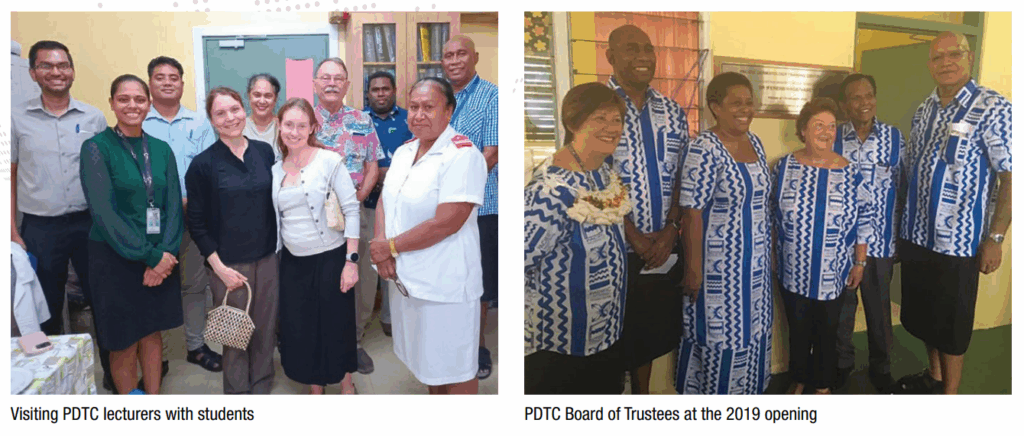
The Fiji Ministry of Health provides the infrastructure for training, staffing, credentialing for trainees and graduates. Pacific Dermatology Ltd assists with lectures, Zoom sessions, and in-person visits. “We always look forward to dermatologists visiting us and providing us with resources that can assist us in teaching,” he says.
Another challenge? There is no fungal culture lab in Fiji. “The common things that we see in a tropical country like Fiji are mostly fungal infections, and unfortunately, we cannot culture those fungi,” he says, adding that he hopes that the recent ILDS funding will help support a fungal culture lab in the main hospital.
Filling the Voids
Dermatology departments are non-existent in most Pacific Island Nations. As such, skin diseases are diagnosed and treated by providers who also treat leprosy and sexually transmitted infections or by internal medicine specialists. “Once we’ve graduated enough dermatologists, we hope that they establish dermatology departments in their own countries,” he says. “It takes another two or three years of practice after graduation before they are fully recognized as dermatologists.”
Claire Fuller, MA, FRCP, Chair of the International Foundation for Dermatology (IFD), recently visited the PDTC on the heels of the passage of the World Health Assembly Resolution that recognized skin health as a global public health priority.
“Fiji is sort of a vanguard center or nation in that it’s already adopted some of the things in the Resolution, and now it’s got this political will to see how it can galvanize the other Pacific Island Nations to join with them, follow the blueprint, and expand dermatology in these other island nations,” she says.
“It was just fantastic to reflect on what the PDTC have achieved already, and I am optimistic about what they will accomplish with the added leg up they’ve got from this relationship with the ILDS,” she says.
Their missions are aligned, she says. “We’re trying to improve global skin health for everyone through education, research, and care for skin diseases worldwide, and the PDTC is doing that [by] delivering high-quality education, undertaking local research, and seeing thousands of patients a year,” she says.
In addition, the PDTC is growing its international dermatology relationships, she adds. “They’ve already got good local and regional relationships with ministries, but they are really expanding in other areas.”
The PDTC joined Gloderm’s Supporting Emerging Education in Dermatology (SEED) network, an initiative to support the growth of new dermatology training programs, particularly in underserved areas. This network is for healthcare professionals leading or involved with early-stage training programs and offers a platform for connection.
“They’re all facing similar issues, and it’s great for them to be able to circulate resources as they become available, including opportunities for funding,” Dr. Fuller says, noting that the PDTC just applied for a SEED grant.
The PDTC is planning to host a medical education meeting next year. “We could envision how that could become an annual event, not only welcoming back and maintaining the skills of their graduates and alumni, but also including frontline healthcare workers,” she says.
Dr. Fuller hopes that the PDTC will also start to train nurses across the nation.
Another goal of the PDTC is to improve data collection and record and reduce disease burden.
“This will allow us to see what sort of impact we’re making in terms of service provision, reducing the burden of skin disease, and getting patients diagnosed more quickly and treated more effectively,” she says.
The development of a surrogate marker could help speed these efforts. “On the Solomon Islands, they treated the whole island for scabies, and 10 years later, they found that the average blood pressure on the island, which is something that is recorded, was significantly lower as a result of treating scabies,” she says. Scabies leads to kidney disease, and kidney disease increases blood pressure.
Implementing the Patient-Reported Impact of Dermatological Diseases (PRIDD) tool, a validated dermatology patient measure of disease burden, will mobilize the patients to become great advocates for improving skin health resources. “This tool allows patients to shout out about the impact their skin disease is having and then to shout out about the benefit when they are treated,” she says.
To Learn More About:
- Volunteer opportunities at PDTC, visit https://pacificdermatology.org.au/
- Gloderm, visit https://gloderm.org
- The ILDS, visit https://www.ilds.org/